Compare Care, Heat, and Everyday Wear
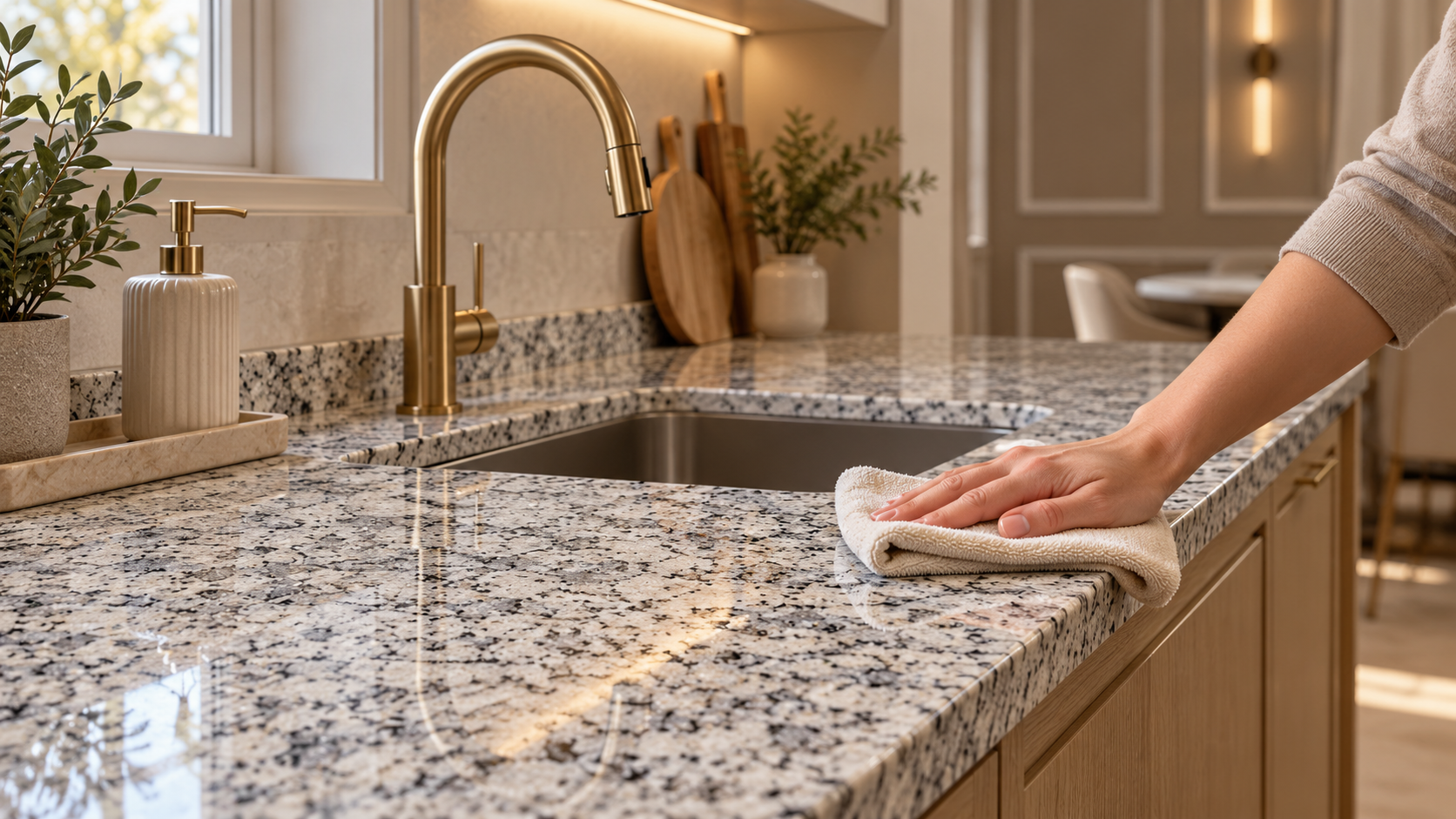
Sealing and cleanup: Quartz is nonporous and generally doesn’t require sealing. Granite’s absorption varies, so its care should follow the selected stone and sealer.
Both need prompt cleanup. Quartz can still mark or stain. Sealed granite can still absorb a spill, especially if it sits too long. Use the cleaner recommended for your material, rather than assuming one household product suits both.
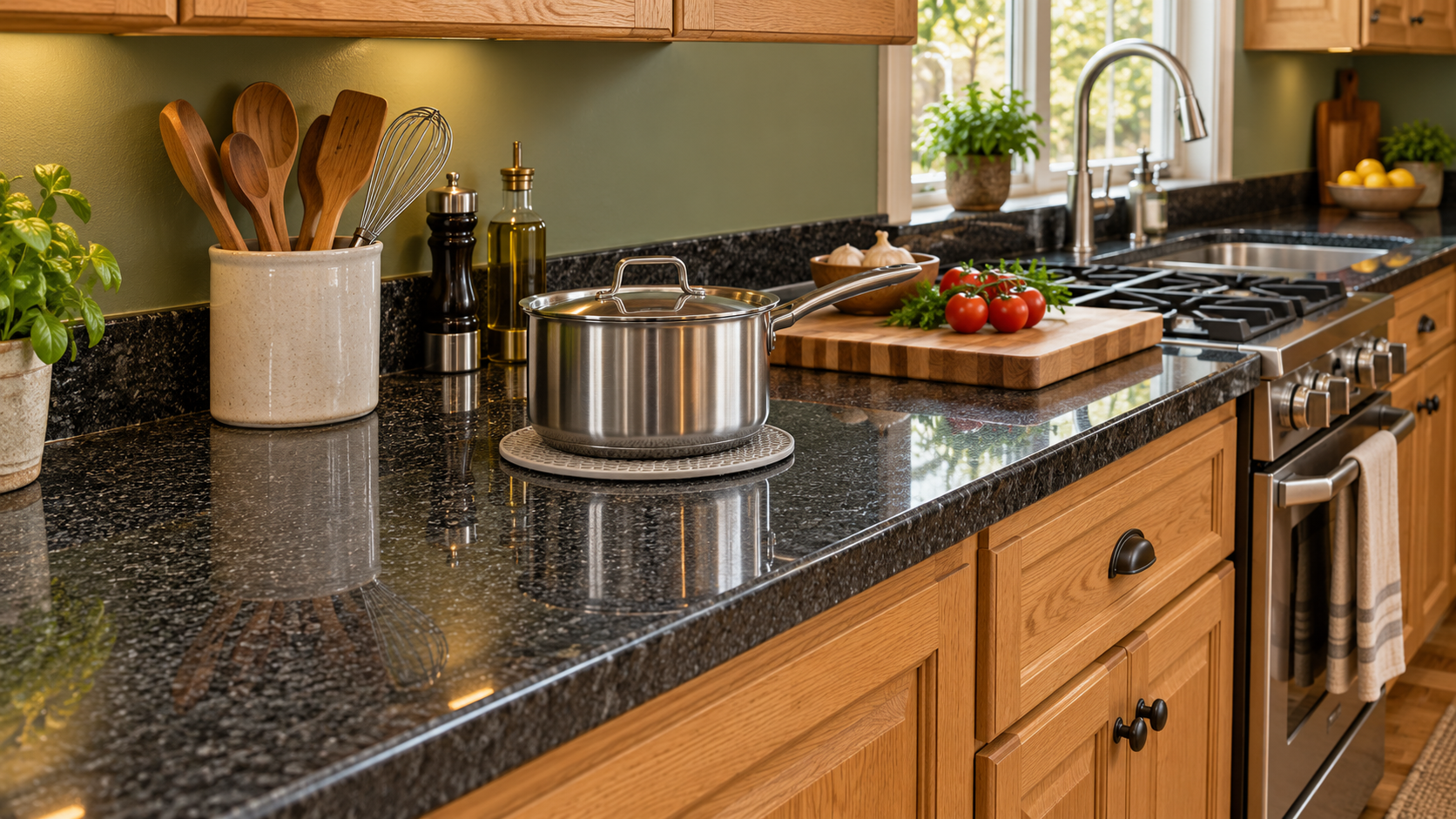
Heat: Granite tolerates heat well, but concentrated heat can cause thermal stress. Quartz’s binders can suffer heat damage. Use trivets for hot pans and check the product’s guidance for countertop appliances.
Caesarstone’s quartz guidance calls for heat protection, while the Natural Stone Institute discourages direct localized heat on granite. Good heat resistance doesn’t replace that habit.
Scratches and chips: Both resist daily wear, but a hard impact can damage either surface. Edges and corners are vulnerable to hard impacts. Use cutting boards, and ask your fabricator about damage instead of attempting a repair that could alter the finish.
Around the sink, dry splashes before deposits build up. For persistent marks, follow the installed product’s care instructions. Quartz and granite don’t share a universal cleaning recipe.
These differences make quartz simpler if sealing is a task you’d rather skip. Granite remains a practical choice when you’re comfortable checking its protection as part of routine care.
Compare the Full Slab and the Installed Quote
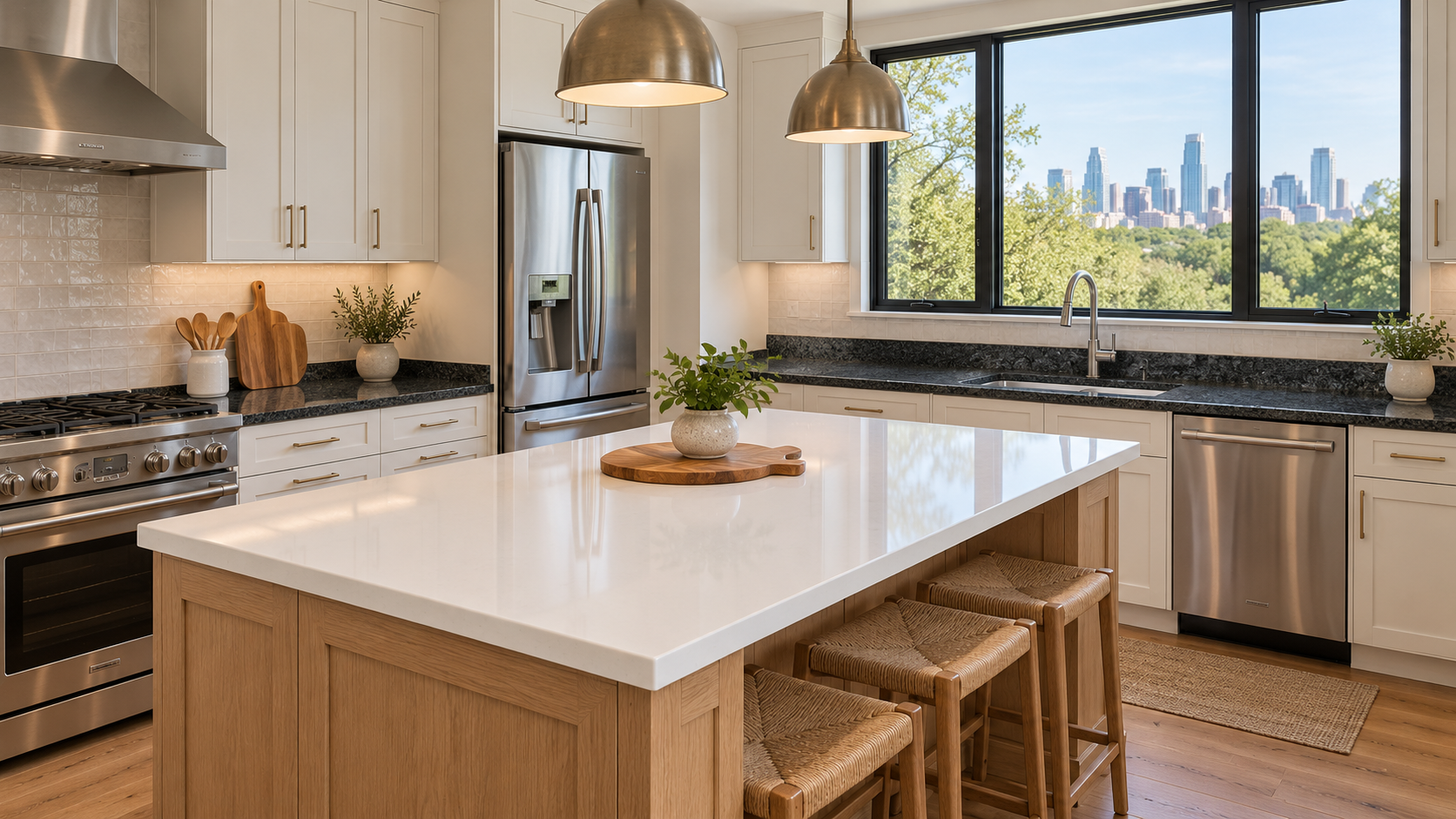
When comparing granite vs. quartz in Austin, put the selected materials beside each other and ask for the same installed scope. Neither material is always cheaper.
Your kitchen layout affects how many slabs you’ll need. Edge work and sink cutouts also affect price, so similar square footage doesn’t guarantee similar totals.
Check each quote for:
- The specific material, finish, and slab quantity.
- Edge profiles, sink cutouts, and faucet holes.
- Backsplash height and material, if included.
- Fabrication, delivery, installation, and site-access requirements.
- Old-countertop removal and any work handled by separate trades.
Bring a cabinet sample when reviewing the materials. Our guide to matching countertops with kitchen cabinets helps you check undertones before committing.
Plan the backsplash at the same time. Coordinating countertops and backsplashes avoids choosing two patterns that compete once they’re in the room.
Before templating, confirm the cabinet readiness and fixture specifications. Review the layout and proposed seams before fabrication. Quartz’s pattern consistency doesn’t make every seam invisible, and granite’s natural movement needs deliberate cut placement.
At True Blue Surfaces, digital templating and in-house fabrication connect those choices to the countertop we install. Finalizing the details early gives the project team an agreed plan to work from.
Get a Material Recommendation for Your Kitchen Plan
Bring your kitchen plan to True Blue Surfaces before choosing between granite and quartz. Tell us what you like about each material and how much care you’re willing to take on.
Share your project city, preferred timing, and cabinet or sink decisions. We can review the countertop scope and help you compare materials before measurement and fabrication.
You don’t need a final selection to start.
Talk with True Blue Surfaces about granite and quartz for your kitchen.
Frequently Asked Questions
Is Quartz More Expensive Than Granite in Austin?
Not always. Prices overlap, depending on the granite slab or quartz design and the work needed to complete your kitchen.
Compare the exact materials with matching quote inclusions. A price for a basic edge and one sink cutout isn’t equivalent to a quote with a waterfall end or full-height backsplash. Slab quantity matters, too. Ask for a project-specific estimate so you can see how each choice changes the installed cost.
Which Countertop Needs Less Maintenance, Granite or Quartz?
Quartz removes the sealing task, which makes it a simpler choice if you want fewer care decisions. Both materials still need cleaning and heat protection.
Granite’s sealing needs depend on the stone and the product used to protect it. Some varieties need more attention than others. Ask for care guidance on the actual material you’re considering, rather than judging every granite by the same schedule. Choose quartz if avoiding that task is a firm priority.
Does Granite or Quartz Add More Resale Value?
Neither guarantees a higher sale price. A well-maintained countertop that works with the cabinets and overall kitchen can appeal to buyers in either material.
If resale matters, consider the home’s style and price point alongside your own needs. Avoid treating a whole-kitchen remodel return as a promise for one countertop. Our article on countertop choice and resale explains why material choice needs that broader context.
Can I Use the Same Quartz Outside in an Austin Outdoor Kitchen?
Don’t carry standard indoor engineered quartz into an outdoor project. UV exposure can discolor its binders, and outdoor use falls outside standard indoor product warranty coverage. A patio roof doesn’t remove those concerns.
Choose an outdoor-suitable material for that application. Granite, appropriate quartzite, or outdoor-rated porcelain offer options to review with your fabricator. Confirm the specific product and installation requirements; your indoor countertop choice doesn’t need to dictate the outdoor one.