
What Granite Needs to Stay in Good Condition
Granite care starts with a few ordinary kitchen habits:
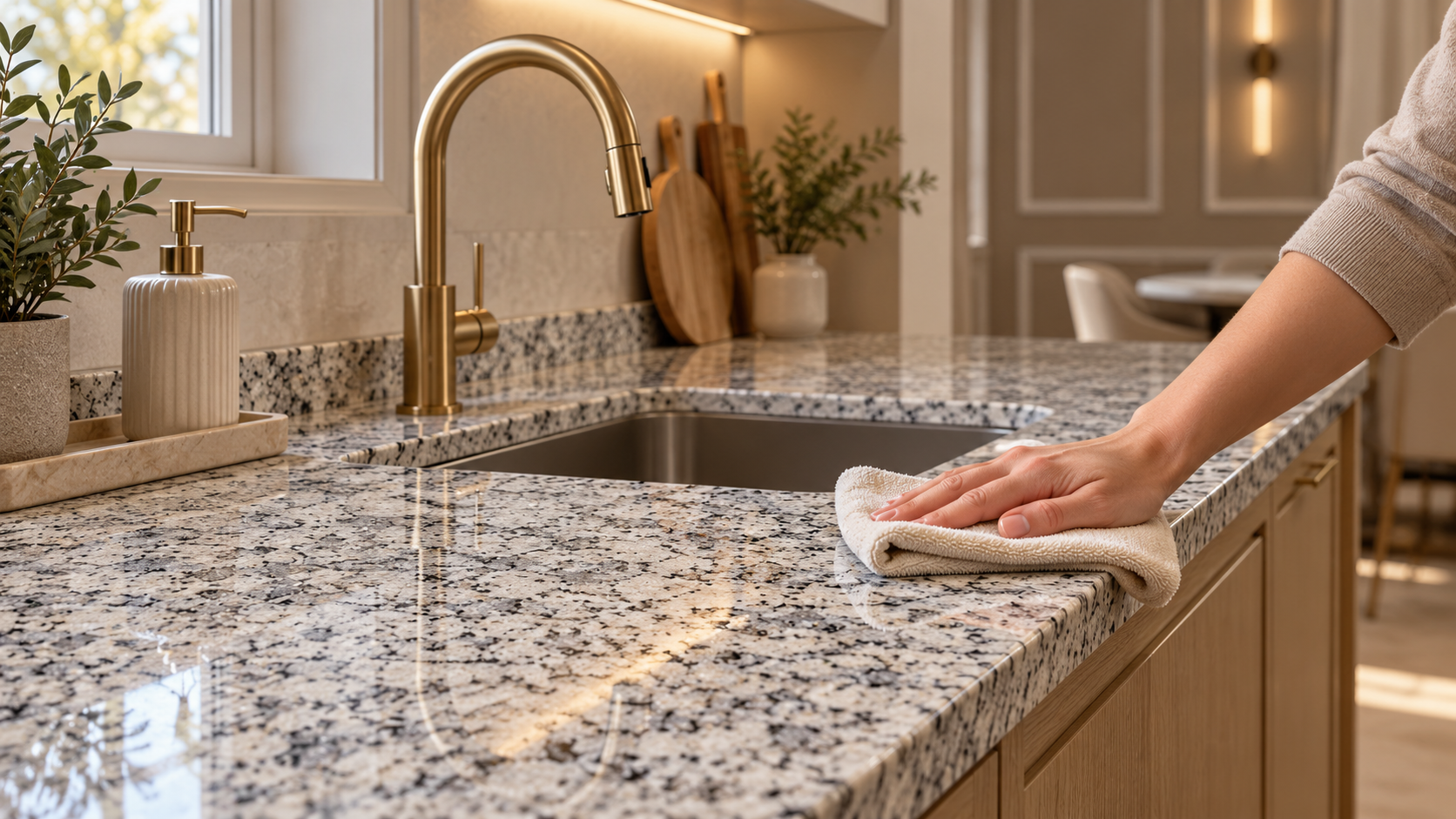
- Wipe spills promptly. Don’t leave cooking oil, coffee, or wine sitting on the stone.
- Use a mild, stone-safe cleaner. Follow the guidance for your stone and sealer; avoid abrasive cleaners and vinegar-based home remedies.
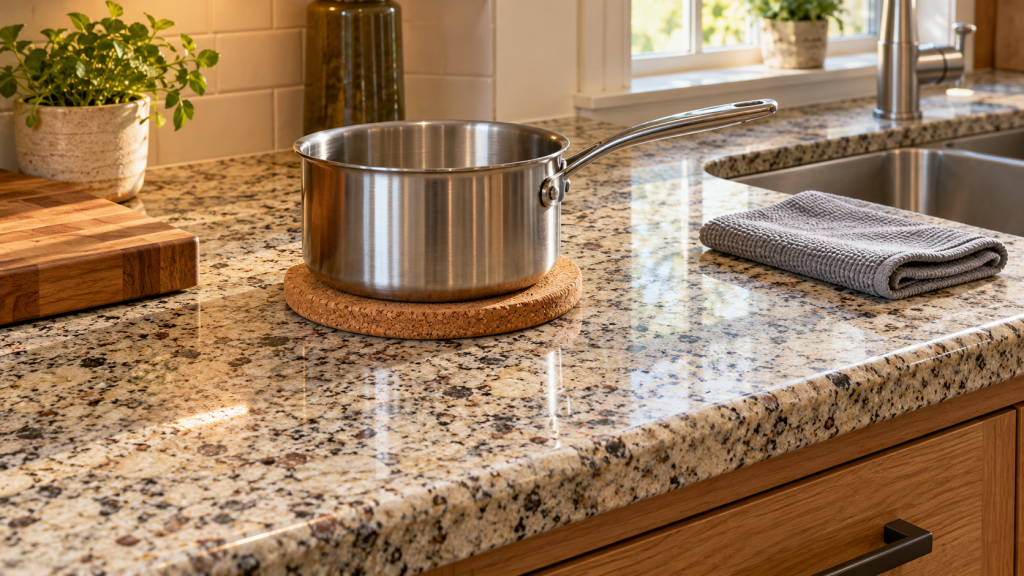
- Put hot cookware on a trivet. Heat resistance doesn’t eliminate the risk from sudden temperature changes.
- Keep a cutting board nearby. It protects your knives and reduces avoidable wear on the countertop.
Sealing depends on the stone. Some granites absorb liquids more readily than others, and the sealer you use affects the care schedule.
The Natural Stone Institute’s sealing guidance explains why a blanket rule doesn’t fit every countertop. Your fabricator should tell you whether the selected stone needs sealing and how to check its condition.
A sealer that soaks into the stone helps reduce liquid absorption. It doesn’t make granite waterproof or protect it from heat damage.
For a closer look at timing, read our guide to when granite needs resealing. Use that guidance alongside the instructions for your own countertop, rather than assuming every granite needs the same annual treatment.
What to Confirm Before Granite Fabrication Begins
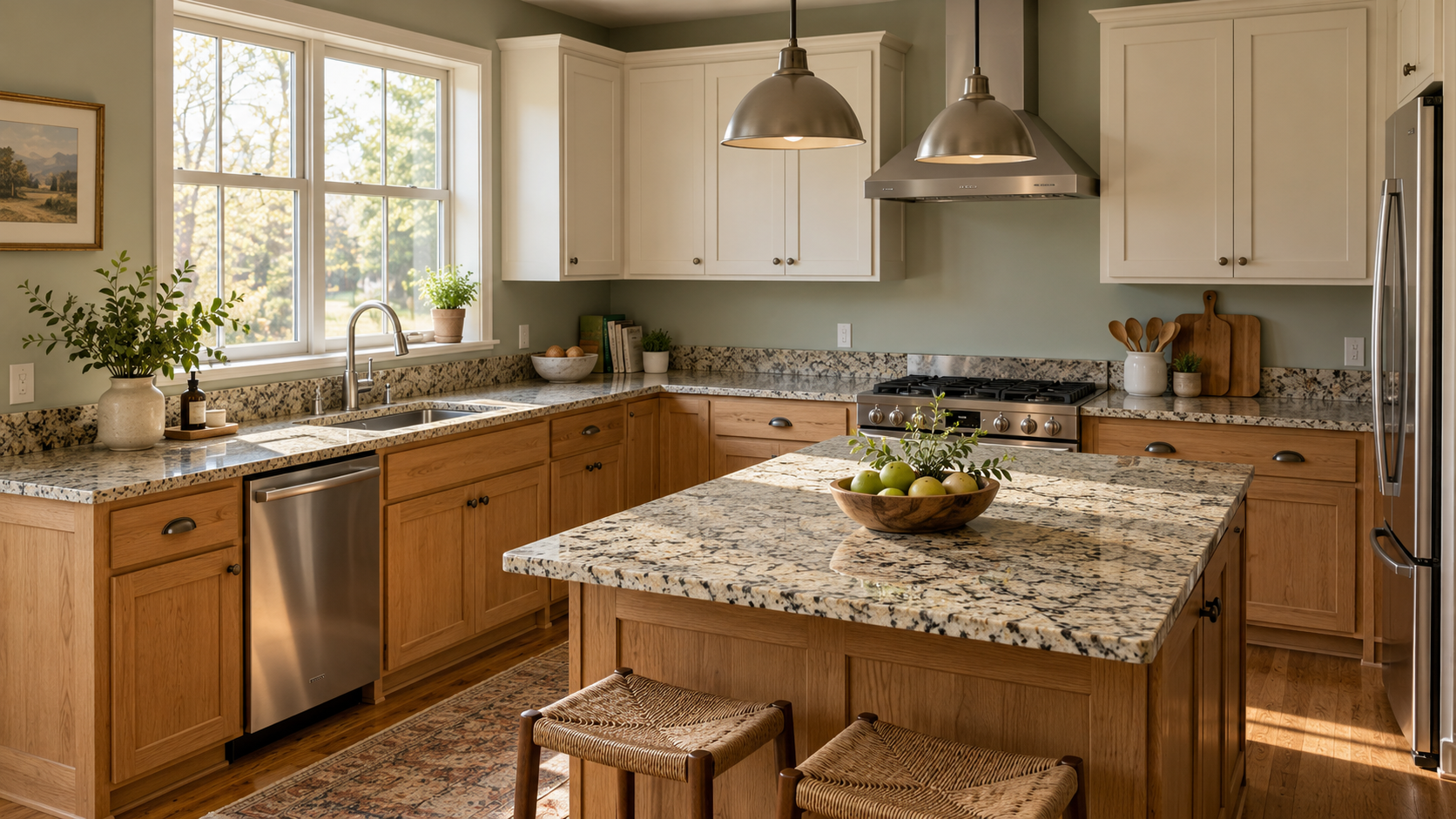
Before buying granite countertops in Austin, confirm how the slab will fit your kitchen and what the installed quote includes. These decisions belong before cutting begins:
- The full slab and finish. Review the actual stone and discuss how its pattern will run across the island or counter.
- Cabinet condition and support. Cabinets must be stable and ready for measurement. Overhangs may need added support.
- Sink and faucet specifications. Confirm the sink model, mounting style, and faucet-hole requirements.
- Edges and seams. Review the edge profile and proposed seam locations. A seam can remain visible even with careful workmanship.
- Quote inclusions. Clarify fabrication, installation, backsplash work, and any removal or separate trade responsibilities.
Bring the cabinet finish into the selection process. Our guide to matching countertops with kitchen cabinets explains what to check before choosing the stone.
The process then moves from an initial layout and material selection to digital templating. That measurement informs the slab layout, which you review before fabrication and installation.
At TBS, we measure your kitchen digitally and cut the stone in-house from the approved layout. See our fabrication and installation process for the sequence.
Counter area is only part of the price. Slab quantity, cutouts, edge work, and site access also affect the job. Comparing the same scope makes two quotes more useful.
Get a Granite Quote Based on Your Kitchen Plan
You don’t need to choose your granite before contacting True Blue Surfaces. Share your approximate layout and project city, along with your preferred timing.
Tell us whether you’re keeping the cabinets and if you’ve chosen a sink. We’ll help you discuss the material and countertop scope before digital templating and in-house fabrication.
TBS has served homeowners and builders since 2007. We handle the countertop portion and coordinate installation with your project.
Request a granite countertop quote for your kitchen plan.
Frequently Asked Questions
How Much Do Granite Countertops Cost in Austin?
Your installed price depends on the selected stone and the work required for your kitchen. Square footage is a starting point, but slab quantity, edge choices, sink cutouts, and access also affect the estimate.
Ask whether each quote includes the same fabrication and installation scope. Confirm removal, backsplash work, and plumbing responsibilities separately. A layout and material preference give TBS a more useful basis for pricing than a square-foot number alone.
Do Granite Countertops Need to Be Sealed Every Year?
Not automatically. Granite varies in how readily it absorbs liquids, and sealing needs depend on the stone, sealer, and use.
Follow the care instructions for your countertop. If a small water test darkens the stone as it absorbs, ask your fabricator whether resealing is appropriate. Don’t apply more sealer solely because a year has passed. The goal is suitable protection for the stone you own, rather than a fixed schedule for every granite.
Can I Put Hot Pans Directly on Granite Countertops?
Use a trivet or hot pad. Granite tolerates heat well, but a sudden, concentrated heat source can create stress within the stone.
The Natural Stone Institute discourages direct localized heat because temperature differences can initiate cracking. Set cookware on heat protection near the cooktop, oven, and serving area. Sealing doesn’t remove that risk, so keep the same habit even when your countertop has a fresh sealer treatment.
Can Granite Be Used for an Outdoor Kitchen in Central Texas?
Yes, suitable granite can work outdoors when the stone and installation suit the application. Review the finish, support, exposure, and care needs before approving the material.
An outdoor counter has different requirements from an indoor kitchen, even under a patio roof. Keep standard indoor engineered quartz off the outdoor shortlist because of UV discoloration and warranty limitations. Granite, appropriate quartzite, or outdoor-rated porcelain deserve application-specific review rather than an automatic substitution.